
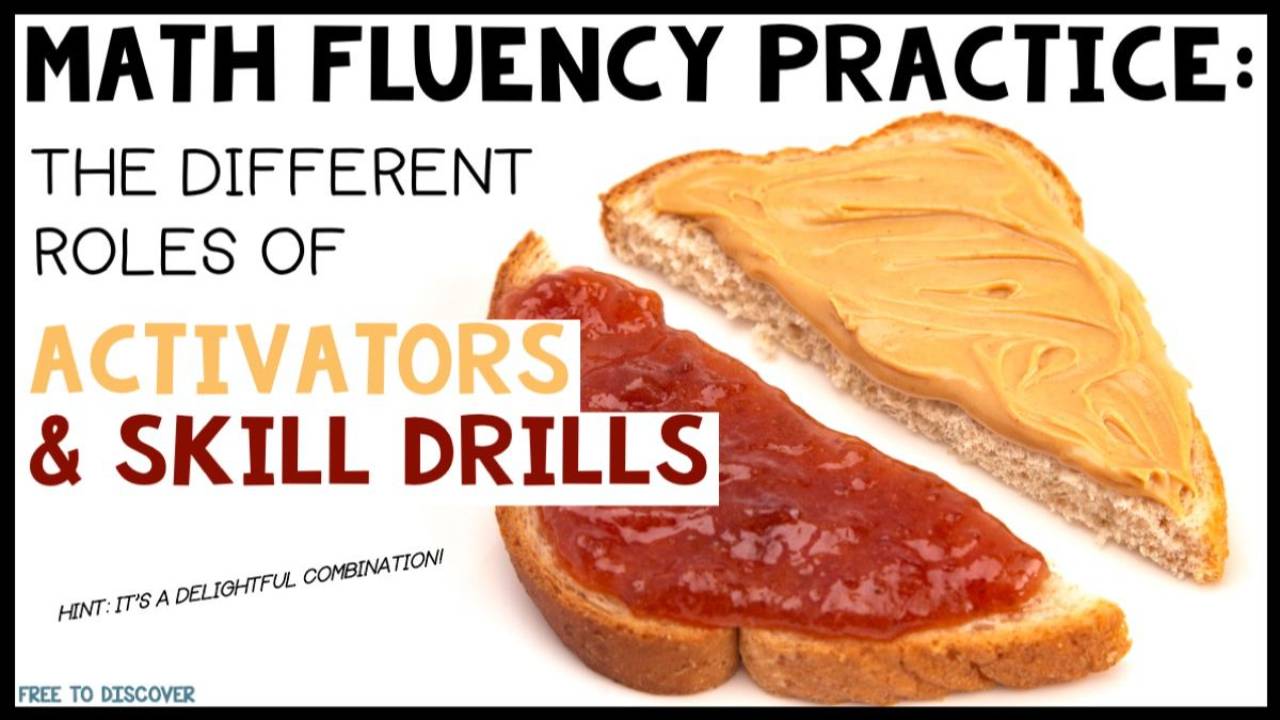
Math Fluency Practice: The Different Roles of Activators and Skill Drills
It's no secret; students are arriving with the lowest math skills we've seen. It can feel like an overwhelming task to teach grade-level standards when there are so many math skill gaps from previous years. Today I'm sharing with you my favorite one-two punch combination to knock out skill gaps and help students build a more solid foundation. This duo is an instant classic; just like peanut butter and jelly!
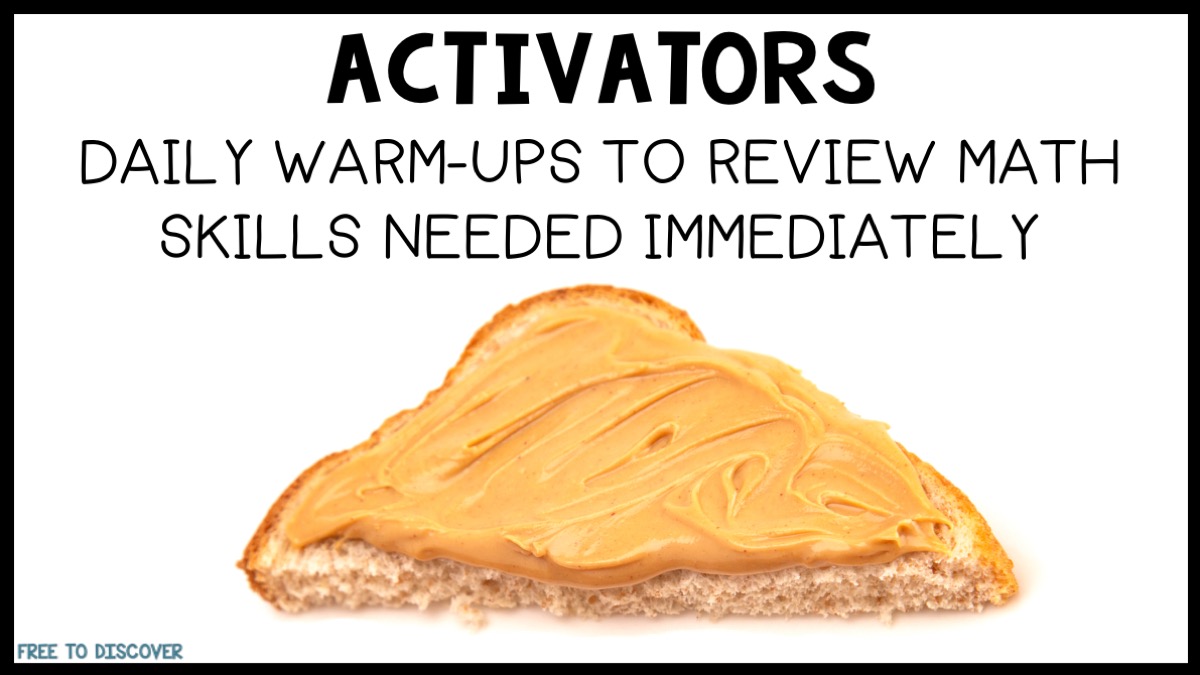
An activator is a daily warm-up: selected with intention and designed with purpose. When selecting a problem of the day, consider which math skills students must recall from previously learned material in order to be ready to access the lesson. For example, if you're teaching students how to write linear equations given two points, select review questions involving finding the slope from two points or rearranging an equation to isolate a variable and solve for y. Another example, if your lesson plan includes teaching students how to find the area of circles given the radius or diameter, choose warm-up questions that involve students identifying the radius and/or diameter given different figures. One last example, if you are beginning a unit on graphing proportional relationships, begin by asking students to plot or identify points on a coordinate plane. You get the idea!
The purpose of an activator is to ACTIVATE students' minds by equipping them with the review math skills they need in that day's lesson. Don't waste the first five minutes of your class on just another question. Be intentional with this component of the lesson plan, and tie it into the big picture of the day. The intentionality in the activator portion of the lesson will aid in developing brain-based connections between topics and increasing retention. Instead of practicing with an isolated skill, students see how a recalled topic connects to the new material they are learning. (Download some free activator templates.)
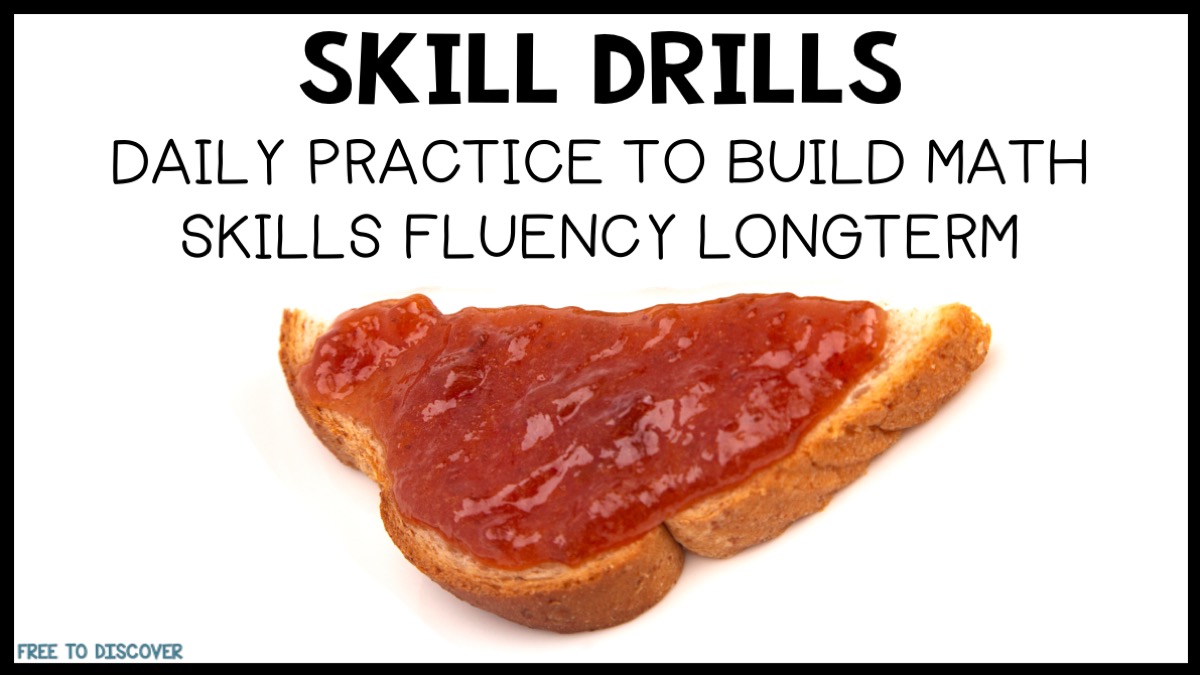
While activators fill an immediate need in the learning process, Math Skill Drills take a slow, consistent approach to have lasting longterm impact on skills fluency development. When students work on building skills fluency for five minutes per day in a consistent, systematic way, real measurable progress is built over time. Math Skill Drills are a math intervention tool that promotes math skills development, increased confidence, and improved independence. Students work through a worksheet to practice the same 20 skills every week. Each worksheet contains the same type of problem in the same corresponding box, so students can look back at their own work from previous assignments with ease to aid in completing the new questions. Students and teachers alike love this system!
Unlike activators which are directly tied to the lesson being taught that day, the skills on Math Skill Drills stay consistent and may or may not be directly related to the actual lesson. The 20 review skills are foundational number sense skills that students generally need in order to be successful with any future math class; topics like fraction operations, solving equations, and calculating with decimals are helpful skills to review for a wide variety of purposes. Many of the skills included on Math Skill Drills are topics that were taught in previous grade levels that warrant daily or weekly practice to stay sharp and accessible. (Download a free sample of Math Skill Drills or get 3 weeks free when you subscribe.
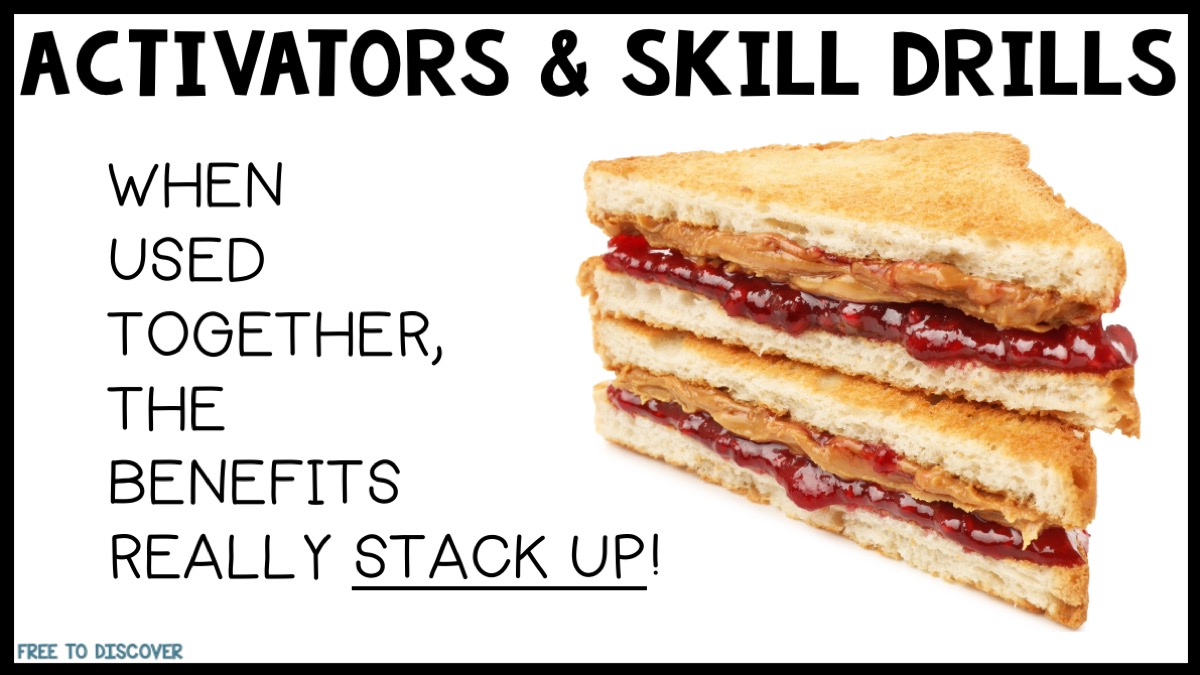
Both activators and Math Skill Drills are helpful in addressing math skill gaps. Activators take a targeted immediate approach to instantly increase accessibility to new learning standards. Math Skill Drills, on the other hand, take a steady, systematic approach to building students' number sense over the course of a school year. When used together, the benefits really stack up!
Math Skill Drill sets for grades 5 through Algebra 2 are available for purchase from Free to Discover on TPT. Check them out, and start stacking up some fluency skills in your classes!
Join the Free to Discover community!
When you subscribe, you'll access Issue 1 of our monthly newsletter for secondary math students!
