
3 Practical Ways to Differentiate by Readiness in Math
There are three main reasons to differentiate: readiness, interest, and learning profile. Within each of those three categories, teachers can differentiate the content (what you teach), process (how students learn it), and product (how students show what they learned).
In math, differentiation by readiness tends to present the most urgency because of the wide variety of academic needs within a single classroom. However, far too many differentiation books and presentations give examples that don't work well in math class or stay too theoretical. In this post, I'll share three math-specific, tangible readiness differentiation strategies that you can implement in your classroom right away.

Differentiate Content by Readiness: Adjust Difficulty of Practice Problems
Offer Two Practice Levels
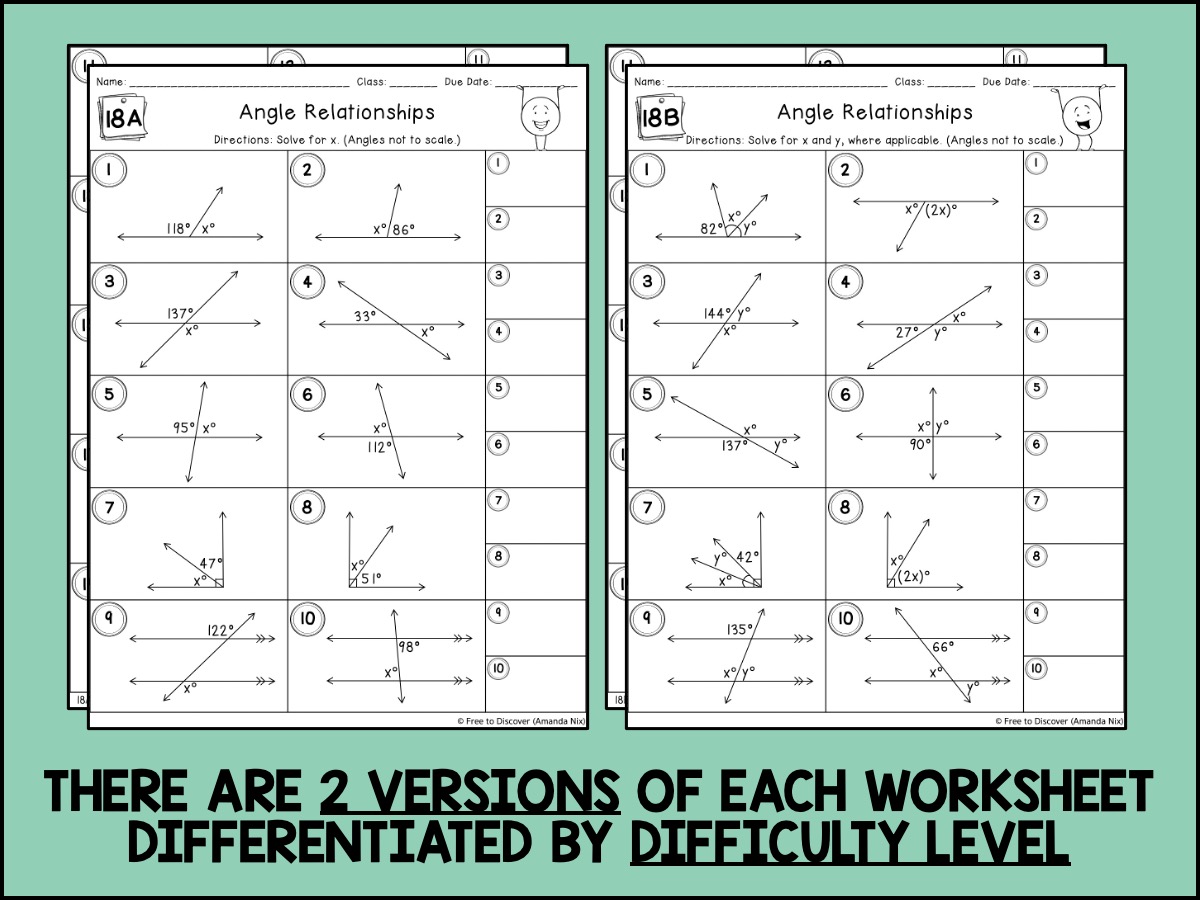
This is probably the most common form of differentiation: adjusting the difficulty of practice problems to meet students where their skills and abilities are today. This can be as simple as providing two levels of worksheet practice on the same topic and allowing students to choose or assigning a worksheet based on recent pre-assessments, exit tickets, or classroom observations. For example, when learning to simplify algebraic expressions, I may offer a version with positive numbers only and a version with integers or rational numbers. Students who are still trying to master the order distribute, then combine like terms can focus on that part of the skill, while other students can work on carefully distributing a negative or fraction. Ideally, all students will work toward the skills the standard calls for, while some students will be able to exceed the standard by working with additional steps and more challenging rational numbers.
Use Strategic Card Assignments
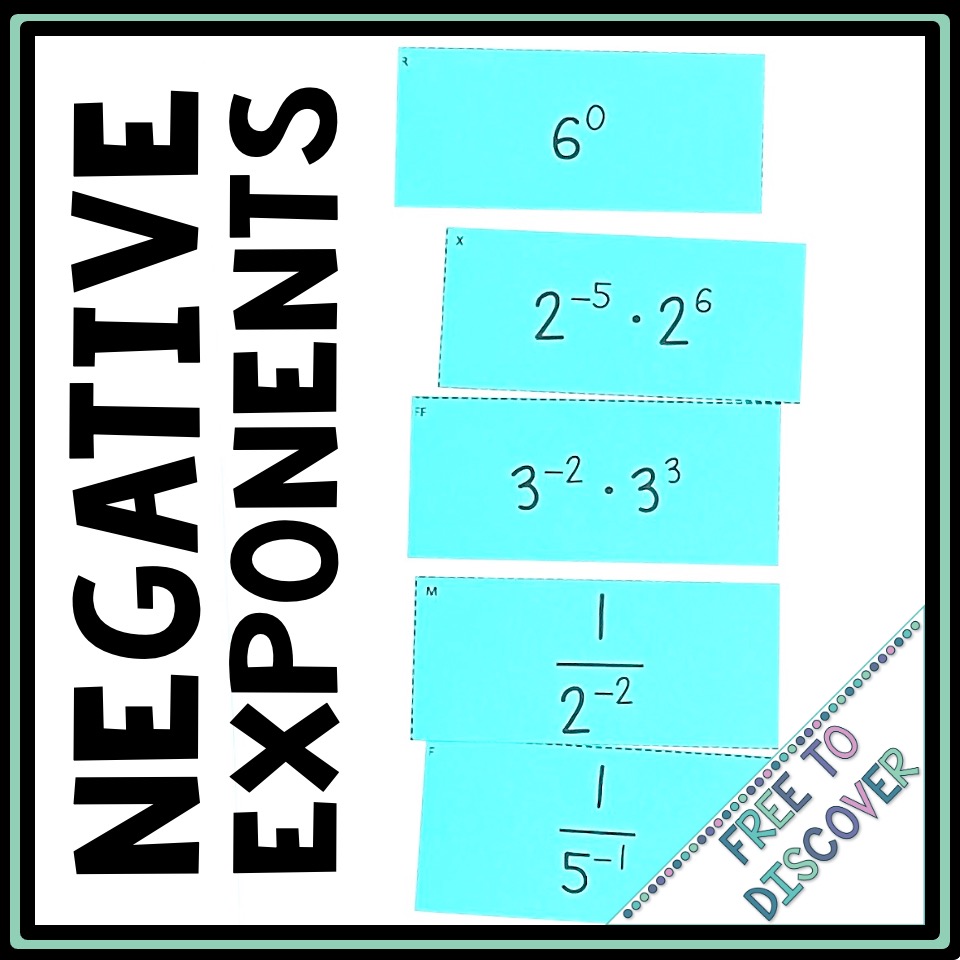
Human number lines, like this Negative Exponents Activity, engage students in skills practice by moving around the classroom and, in this case, lining themselves up from smallest to greatest value. Students evaluate the numeric expression on their card and then compare their result to others to find their ordinal position. Some of the cards contain basic expressions, while others are much more challenging. It may look like I pass these cards out randomly (and I hope it does!). However, ahead of time, I line up the cards from basic to challenging. Then, as I walk around, I give each student a card from the top, middle, or bottom. This encourages struggling learners to participate because the calculations are not a heavy lift. At the same time, students receiving the more challenging cards have an opportunity to persevere with more complex problems.
Level Up At the Board
Another way I differentiate content by readiness is by playing a few rounds of At the Board. Four or five students come up to the whiteboard at the same time. I ask for volunteers and explain that everyone will come up to the board at least once and that the problems get harder as we go. Most of the time, many hands shoot up right at the beginning once I've shared those little disclaimers. Everyone solves the same problem at the same time, both students at the whiteboard and students at their desks. The differentiation comes into play when I call students up with leveling in mind. Allowing students who typically struggle to experience success with easier problems when they are in front of others can help build math confidence. I've used this strategy frequently with equation-solving practice. Read more about At the Board before you implement it in your classroom.
Differentiate with Jigsaws
One final way to adjust the difficulty of practice problems is through a jigsaw activity. Before we start graphing linear functions, I like to do a jigsaw activity in which students graph linear, absolute value, and quadratic functions by making a table. Students make their graph with a partner. Then they form a group with another pair that has the same function family, and they discuss attributes and make observations relating the equation to the graph. Next, the pair moves to a new group to teach others what they learned about their function family. To differentiate, I ensure that less-confident students are given a linear function, while students who are ready for more complexity can extend their thinking with more advanced functions. By design, everyone is practicing with problems at or above grade level.

Differentiate Process by Readiness: Provide Note-Taking Options
There are many ways for students to take notes, and note-taking is an important skill that helps students learn and organize new material. Differentiating note-taking methods is a practical way to differentiate the learning process based on readiness. Here are five note-taking structures that increase in complexity.
Teacher Notes
Teacher Notes are completely filled in with all definitions, examples, and practice problems completed. They are usually necessary for students who have been absent, but they can also be useful for students who significantly struggle with note-taking. There are two ways to utilize Teacher Notes with these students. First, students can try a different method of note-taking during class and then receive the Teacher Notes before they leave. This ensures they have all the information they need in case they missed something. Second, give the student the Teacher Notes from the beginning and have them highlight or add to the notes throughout the class.
Completed Notes
Completed Notes have all definitions and examples filled in, but the practice problems are left blank for the student to try. These can be useful for students who have accommodations that make note-taking difficult. Students can follow along with the lesson without having to write everything down at the same time. When the class works through practice problems, however, they can jump in and write their work in the space provided.
Fill-In Notes
With Fill-In Notes, students may be prompted to write a word, formula, or other value in a space provided in the notes. However, most of the writing is already provided for them. This version of modified notes keeps students engaged by requiring them to follow along with the lesson and record key information as it is presented. The same approach can be used with missing steps in a mathematical example.
Skeletal Notes
Skeletal Notes provide the least amount of scaffolding of the worksheet-based note-taking options. There may be space for definitions and key ideas, example problems listed, and space for practice problems, but students are expected to fill in the missing information throughout the lesson, typically by copying what the teacher is writing at the front board. This method provides structure and organization, but students are responsible for capturing the content.
Independent Notes
The most advanced style of note-taking is Independent Notes, where students write their notes in a ruled notebook. It is important for teachers to model good note-taking and teach students what effective notes should look like. I emphasize writing a header and the date, underlining key words, placing boxes around important formulas, and numbering examples and practice problems. If students have been taught how to organize their notes, they can eventually take responsibility for deciding what information to record and how to organize it.

Differentiate Product by Readiness: Vary Project Complexity
Choose the Project Complexity
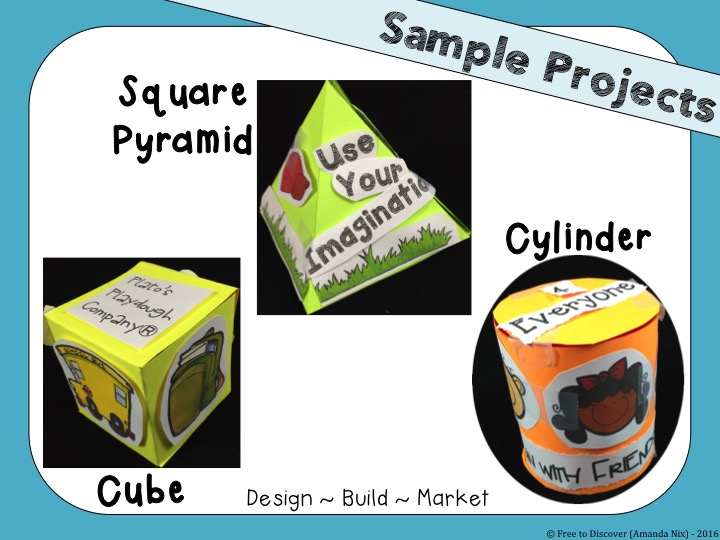
Varying project complexity is an effective way to differentiate the product by readiness. For some units, in addition to tests, students complete hands-on projects to demonstrate their understanding of the content. One of my favorite projects is the Playdough Container Project. Students work in small groups to design and build a playdough container that has a set volume, minimizes surface area, and markets well to parents and children. Students complete all of the planning, calculations, and scale drawings before they actually build the playdough container out of oaktag. Students are encouraged to choose a 3D solid or composite figure as the shape of their container. They can self-differentiate, or the teacher can steer students toward a particular option to provide less or more complexity. The container might be a rectangular prism, a cylinder with a cone on top, or anything in between.
Choose from a Differentiated Menu
Another way to allow students to self-differentiate their demonstration of end-of-unit understanding is through a Differentiated Menu. Perfect for a summative review, Differentiated Menus give students choice. Each menu has four parts: Apps, Soup, Cuisine, and Dessert. The Apps are each worth 1 point and are straightforward, quick warm-ups. Soup questions allow students to warm up with standard math practice worth 2 points each. The Cuisine questions are the meatiest and most challenging application of the topic, worth 4 points each. Finally, Dessert questions are higher-order thinking and open-ended treats worth 3 points each. Students are instructed to complete at least one question from each part of the menu and accumulate at least 30 points. Some students will complete more basic practice, while others will take on more complex problems and need fewer questions to reach the required number of points. Note: If used as a practice worksheet instead of a summative assessment, this can be considered differentiation of content by readiness.
You've got this!
Differentiating by readiness does not require creating completely different lessons for every student. In math, small changes to the content, process, or product can provide students with the level of support or complexity they need. You can adjust the difficulty of practice problems, provide different levels of scaffolding for note-taking, or vary the complexity of a project while keeping the essential learning goal the same. The goal is not to create a different curriculum for every student. It is to provide an appropriate entry point, level of support, and degree of complexity so that every student can continue working toward meaningful mathematical learning.
Join the Free to Discover community!
When you subscribe, you'll access Issue 1 of our monthly newsletter for secondary math students!
